After considerable debate both of tomorrow’s hike leaders have decided to cancel The hikes scheduled for tomorrow, Friday, August 7th on account of the elevated heat index’s forecast for both of our planned destinations.
The heat index is the “feels like” temperature. It combines the actual air temperature with the relative humidity to show how hot the weather feels on the human skin. The higher the relative humidity, the more difficult it is for perspiration to evaporate and cool the body. Tomorrow is threatening to be both warm and humid so that the heat index may be in the 90s.
An elevated heat index increases the risk of cardiac events. As the heat index rises, the cardiovascular system must work much harder to cool the body by pumping blood to the skin, which can trigger heart attacks, strokes, arrhythmias, and heart failure—particularly in vulnerable populations. Hiking uphill when the heat index, well it’s not a really smart thing to do.
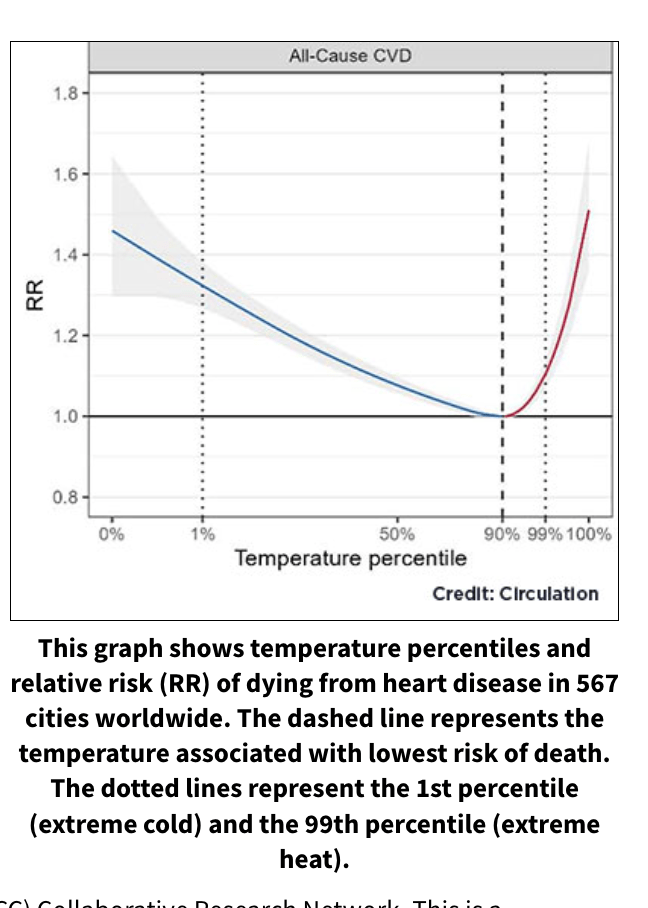
Here are a few additional tidbits of information related to head and cardiovascular disease:
- Climate change is the biggest environmental threat to human health in the 21st century.[1]
- It was reported that heat has led to ≈93 000 CVD deaths worldwide in 2019 alone.[2]
- Although extreme heat can be a risk factor for all ages, older people, pregnant women, and people with chronic morbidities, more specifically those with impaired cardiovascular health, are particularly at risk of mortality and morbidity associated with (extreme) heat. [3]
- Even though we are prompted to cancel the hikes based on the predicted heat index, it seems that hot dry weather is actually associated with even greater heart related deaths than hot humid. [4]
- No surprise but risk of mortality from heat increases with age: A recent meta-analysis shows a 0.8% higher [relative risk] RR in people aged ≥65 years than in people aged 0 to 64 years per 1 °C increase in temperature Another piece of evidence comes from Germany (2005–2016), where Rai et al25 showed 5% higher mortality in people aged 65 to 74 years and 17% higher mortality in people aged 75 years and above compared with people aged 64 years and below due to the effect of heat.[5]
One precaution often suggested is to shift our schedule during the summer and start our hikes much earlier when temperatures are cooler. This suggestion has been rejected in recent years, but we should reconsider doing so.
[1][1] He F, Wei J, Dong Y, Liu C, Zhao K, Peng W, Lu Z, Zhang B, Xue F, Guo X, et al. Associations of ambient temperature with mortality for ischemic and hemorrhagic stroke and the modification effects of greenness in Shandong Province, China. Sci Total Environ. 2022;851:158046. doi: 10.1016/j.scitotenv.2022.158046
[2] Le H, Yan MM, Zhang YQ, Kai W, Wang YQ, Luo SQ, Wang F. Global burden of cardiovascular disease attributable to high temperature in 204 countries and territories from 1990 to 2019. Biomed Environ Sci. 2023;36:222–230. doi: 10.3967/bes2023.025 [DOI] [PubMed] [Google Scholar
[3] Chaseling GK, Iglesies-Grau J, Juneau M, Nigam A, Kaiser D, Gagnon D. Extreme heat and cardiovascular health: what a cardiovascular health professional should know. Can J Cardiol. 2021;37:1828–1836. doi: 10.1016/j.cjca.2021.08.008 [DOI] [PubMed]
[4] Fang W, Li Z, Gao J, Meng R, He G, Hou Z, Zhu S, Zhou M, Zhou C, Xiao Y, et al. The joint and interaction effect of high temperature and humidity on mortality in China. Environ Int. 2023;171:107669. doi: 10.1016/j.envint.2022.107669 [DOI] [PubMed]
[5] Singh N, Areal AT, Breitner S, et al. Heat and Cardiovascular Mortality: An Epidemiological Perspective. Circ Res. 2024;134(9):1098-1112. doi:10.1161/CIRCRESAHA.123.323615

Leave a comment